The Puuc Archaeological Museum
Inaugurated on July 18, 2026, in Kabah, Yucatán, this is the first museum dedicated to preserving and sharing the Puuc legacy a pivotal element of the Maya world.
It is a space designed to foster an understanding of the history, architecture, daily life, and worldview of the ancient Maya cities in this region of southeastern Mexico.
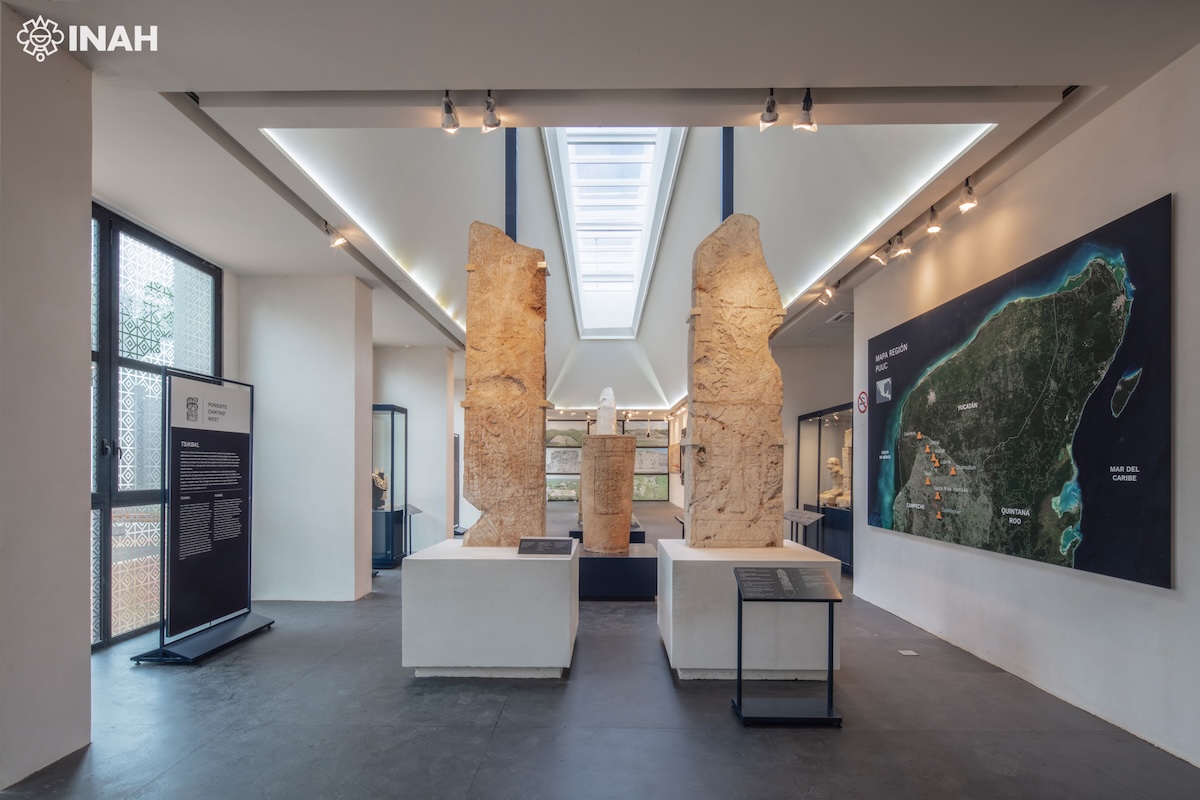
Featuring a collection of 189 archaeological pieces recovered over the last 20 years at various regional sites, alongside scale models, murals, and multimedia resources, the museum aims to connect the public with a heritage that, for centuries, remained scattered across different research projects and archaeological zones.
Highlights include:
Uxmal Stela 14 considered one of the iconic pieces of the Maya Classic period.
The sculpture of an Itzá warrior, representing the political shifts that occurred in the region during the Postclassic period.
The carved doorjambs from the Popol Nah, part of the Codz Poop building in Kabah, on public display for the first time, depicting rulers participating in political and ritual ceremonies. In addition to the archaeological collection, the museum features 62 complementary museographic elements include:
- A reproduction of a royal kitchen from Kabah, reconstructed based on archaeological findings from 2008.
- Scale models of Maya cities.
- Murals created specifically for the museum.
- A reproduction of the wall paintings from San Bartolo, Guatemala.
- A traditional wooden canoe.
- Hives for raising Melipona bees (xunáan kaab), an ancestral practice that remains active in various Maya communities.
- The history of the Maya world explained in four galleries
Puuc means "hill country" in Mayan and refers to a region lacking rivers, lakes, or surface cenotes, with a deep-water table. These conditions have driven the development of solutions for capturing and storing water, as well as a unique architectural style that endured for over a thousand years.
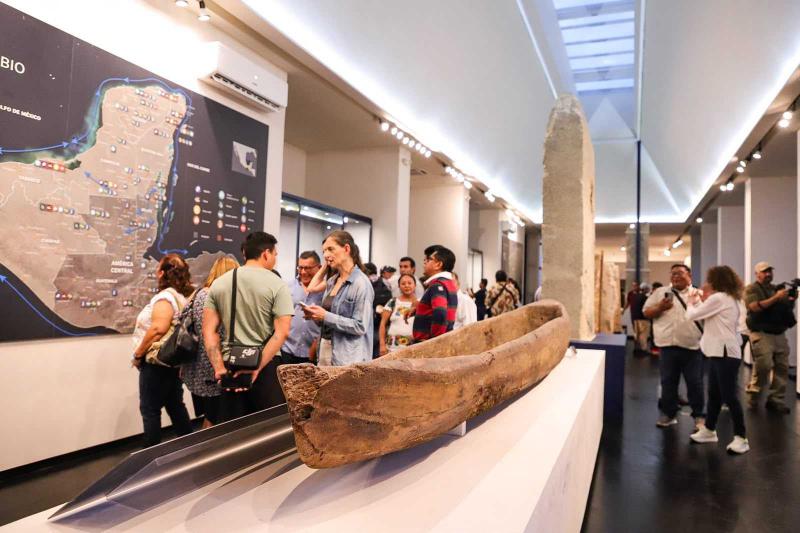
The tour is designed for visitors to explore the museum and comprises four galleries:
West Gallery: The Power of Man (Tsikbal). Explains ruling lineages, the link between political power and the divine realm, and trade between Maya cities.
North Gallery: The House of Images (Wíinte’naj) Dedicated to the Maya religious universe, it brings together objects related to gods, ancestors, and the underworld.
- Jade.
- Obsidian.
- Exotic feathers.
- Other prestige goods.
East Gallery: Time (K’in). Examines time and Maya calendars, as well as astronomy and archaeological research in the Puuc region.
South Gallery: The Dwelling of Man (Yotoch). Focuses on the daily life of Maya communities.
Visitors can learn about aspects such as:
- The Long Count calendar.
- Haab.
- Tzolk’in.
- Social organization.
- Ancestral agriculture.
- Craft production.
- Religious beliefs.
- The relationship between the people and the land.
The gallery concludes with a reflection on historical cycles through commemoration and completion rituals related to the abandonment of ancient Maya cities.
The Puuc Archaeological Museum is located within the Kabah Archaeological Site in Yucatán. It is open Tuesday through Sunday, from 8:00 a.m. to 5:00 p.m.
Images obtained from inah.gob.mx and yucatan.gob.mx